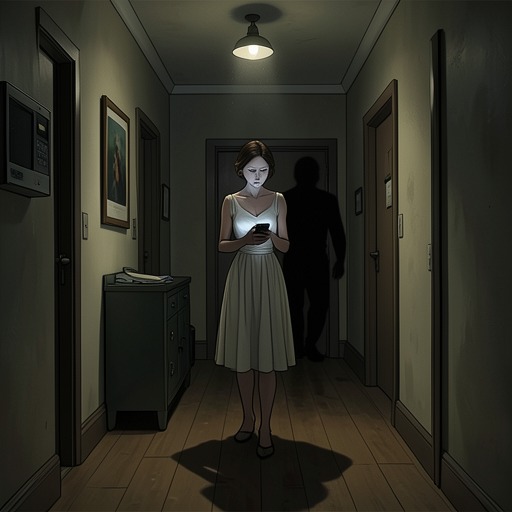
Enzo warns Millie to leave the Winchester home
The HousemaidEnzo warns Millie Calloway to get away from the Winchester family home, first through a single Italian word and later through a more direct appeal in English. The warning’s significance lies in its repetition: a word Millie initially jokes about becomes, once translated and then restated by Enzo, evidence that someone in the household may be in danger, even though he does not explain the threat.
The First Warning
When Millie first meets Enzo, the Winchester family home is still new to her: she has only just begun work there, and Nina Winchester greets her with an exuberant embrace and says she is glad Millie took the job. Enzo, the landscaping worker, tries to speak to Millie but struggles to find the words. He manages her name and begins, “You…” before hissing a word in Italian. His attempt is interrupted by the sound of the front door unlocking.
Enzo immediately returns to where he had been crouched in the front yard and busies himself with the landscaping. His abrupt retreat makes the warning feel both deliberate and constrained: he tries to communicate, but the arrival of someone at the house cuts the exchange short. Millie catches only the word “Pericolo.” At this point, she does not know what it means and turns it into a joke, imagining that it might refer to a soft drink. Her playful mishearing creates a sharp gap between the gravity of Enzo’s effort and her own incomplete understanding.
Millie Finds the Meaning
The word returns to Millie after she has settled into her new surroundings. Although her attic room has a window, it will not open. She hesitates to raise the problem with Nina, not wanting to seem dissatisfied on her first day, and tells herself that she might mention it the following week. The small, unusable window is the setting for her second sight of Enzo: he is mowing the backyard, pauses to wipe sweat from his forehead, and looks up at her through the glass. He shakes his head as he did when they first met.
That gesture recalls the Italian word. Millie takes out her new cell phone and uses its browser to look up the translation. She has only recently become familiar with such phones, having encountered them at the halfway houses where she stayed after incarceration, and a weak signal in the attic makes the search slow. The result finally appears: “Danger.” The translation changes the earlier encounter from an odd, possibly comic exchange into an intelligible warning. Enzo had tried to tell her something serious before she entered the house; his look through the window renews the warning without supplying its cause.
The physical arrangement sharpens the contrast between seeing and understanding. Enzo can see Millie through the small window, and Millie can see him in the yard, but their communication remains limited: first by his difficulty speaking English, then by the glass and the weak phone signal that delays the translation. The word becomes clear only after Millie has already entered the household and taken up a position in the attic that she cannot readily leave by way of an open window.
The Warning Becomes Explicit
Later, Enzo addresses Millie directly again. As he pauses at the door, he tells her, “You… you get out, Millie,” then struggles to continue and finally gives the warning in English: “Dangerous.” His broken phrasing echoes the first attempt. What had initially been a foreign word, and then a translation on Millie’s phone, is now an unmistakable instruction to leave.
The circumstances of this second appeal give it added weight without clarifying the danger. Millie apologizes to Enzo and thanks him for the package he has brought, using the Italian word “Grazie.” He looks toward the stairwell with a troubled expression, shakes his head, and hurries out before she can stop him to ask what he means. His glance and quick departure reinforce his concern, but the exchange reveals no specific threat, plan, or explanation. The warning is urgent; its source remains undisclosed.
Narrative Significance
Enzo’s warning unfolds as a three-part change in Millie’s knowledge: an untranslated word, a search that identifies its meaning, and a direct English instruction to get out. Each stage confirms the previous one while leaving the essential question open. Millie’s initial joke is not simply corrected by a dictionary definition; the word’s meaning gains force because Enzo repeats his gesture and then risks saying it plainly.
The episode also places Enzo at the edge of the household rather than within its central conversation. He works outside, communicates in fragments, and leaves before Millie can obtain an explanation. That limited access makes his warning an early signal of danger without making him a source of complete information. The reader, like Millie, is given enough to understand that Enzo believes she should leave, but not enough to know why. His repeated appeal therefore shifts the meaning of the home before it reveals the threat inside it.